Introduction
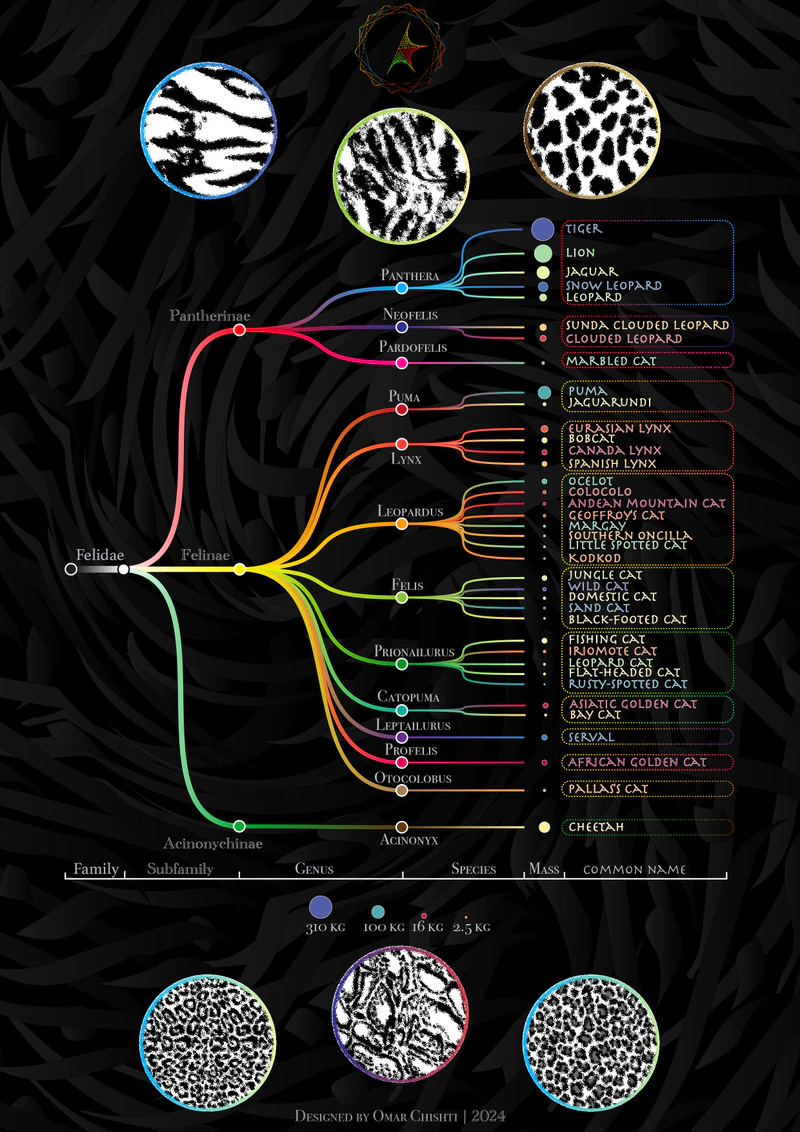
This piece is a bit more whimsical than the rest of the series. It depicts the phylogenetic tree of the Felidae (cat) family using a linear dendrogram. A tree of life, for the feline tree of life. I used slightly outdated data, put together by interns at RAWGraphsaRAWGraphs is an open-source data visualisation framework developed at Politecnico di Milano’s DensityDesign Lab., which leads to some discrepancies from the generally accepted modern phylogenybModern taxonomy recognises 41 extant species across 14 genera in 2 subfamilies (Felinae and Pantherinae), whereas the dataset used here lists 38 species with a separate Acinonychinae subfamily for the cheetah — a classification largely abandoned after genetic studies in the 2000s.. Phylogeny is ever-evolving, so the differences didn’t really bother me.
Data & Design
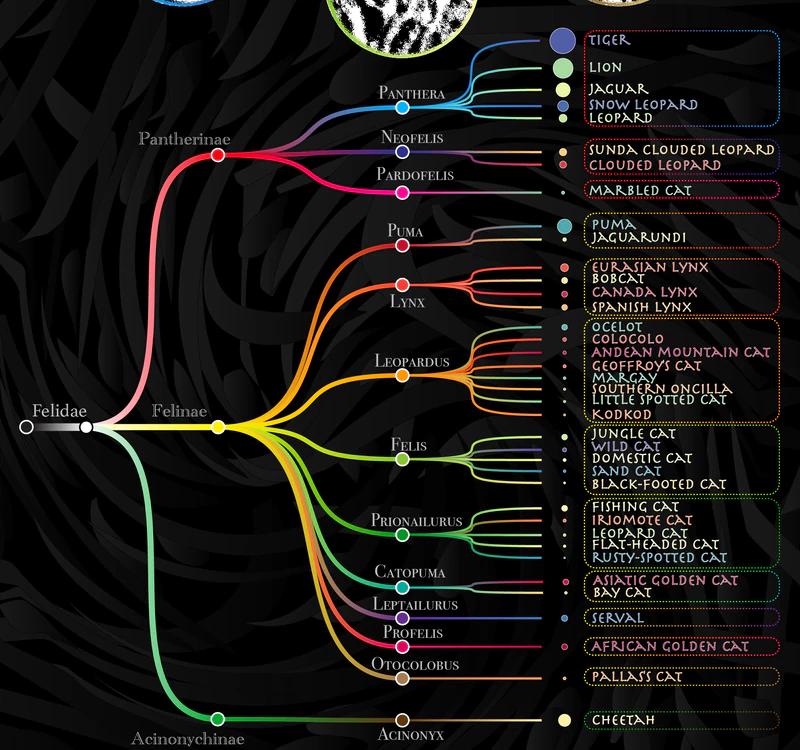
The mass of a representative adult male from each species is encoded by the area of the circle at the termini of the dendrogram. I assigned a colour to each species, and also to each genus/subfamily.
Gradient Innovation
The branches of the dendrogram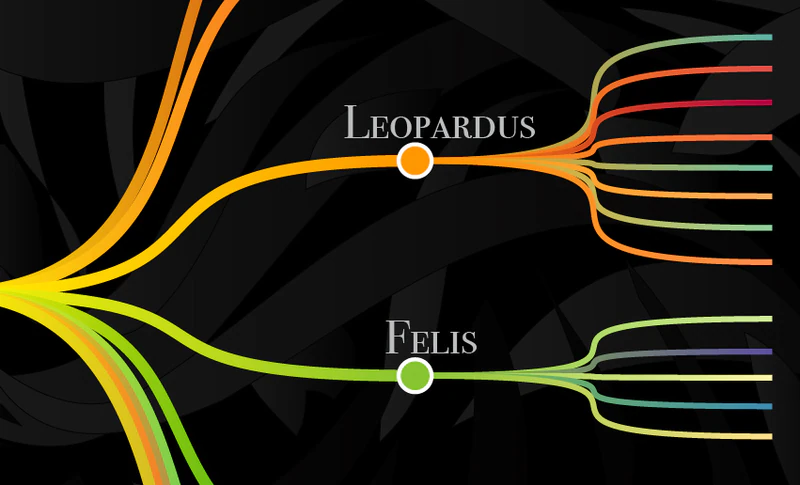 Figure i. Gradient-filled branches transitioning from genus colour (Leopardus, Felis) to individual species colours. have a linear gradient fill progressing from the colour of the previous node to the colour of the subsequent node. It was my one main novel visual contribution here. Particularly helpful for such phylogenetic trees, since it helps convey the gradual progression of evolutionary changes. Divergence from common ancestry.
The first cats are believed to have emerged 25 million years ago, during the Oligocene. The entire Machairodontinae subfamily (to which the sabre-toothed tiger belonged) is unfortunately extinct. Only species in the Panthera genus are called ‘big cats’. Tiger, lion, jaguar, leopard, and snow leopard. The last one is the only one of the five that cannot roar.1
There is some David v Goliath action going on amongst all the cats — one of the smallest ones, the black-footed catcThe black-footed cat (Felis nigripes) kills prey on 60% of hunts, compared to 25% for lions., is considered to be the most successful predator of the lot. Its killing instinct dwarfs the lion and the tiger, two massive apex predator cousins with great PR teams and rather disappointing results.
Speaking of tigers, I highly recommend taking a safari through Ranthambore National Park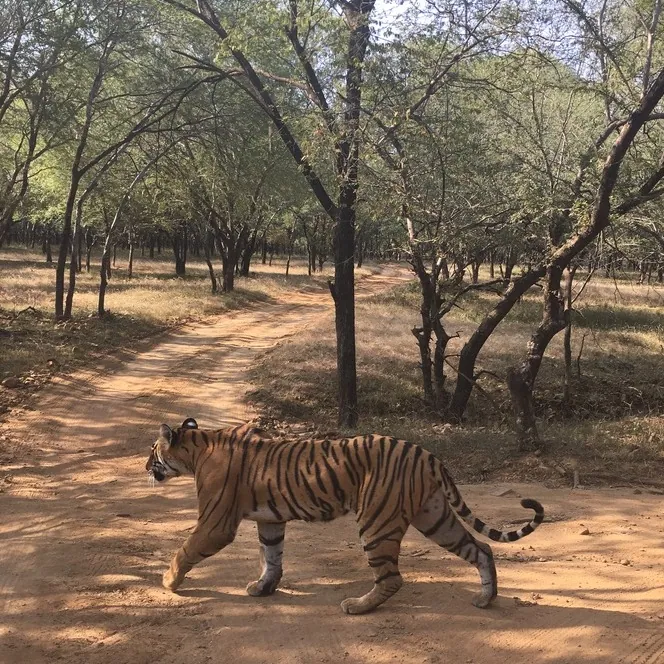 Figure ii. Bengal tiger (Panthera tigris), Ranthambore National Park, October 2016. if you’re ever around that corner of the world. The tigers just roam around the jungle.
I varied the stroke width of the dendrogram moving from left to right, to convey the relative breadth of the classification at each level.
All the branches of a tree at every stage of its height when put together are equal in thickness to the trunk [below them].2 Leonardo da Vinci, The Notebooks of Leonardo da Vinci
The painter/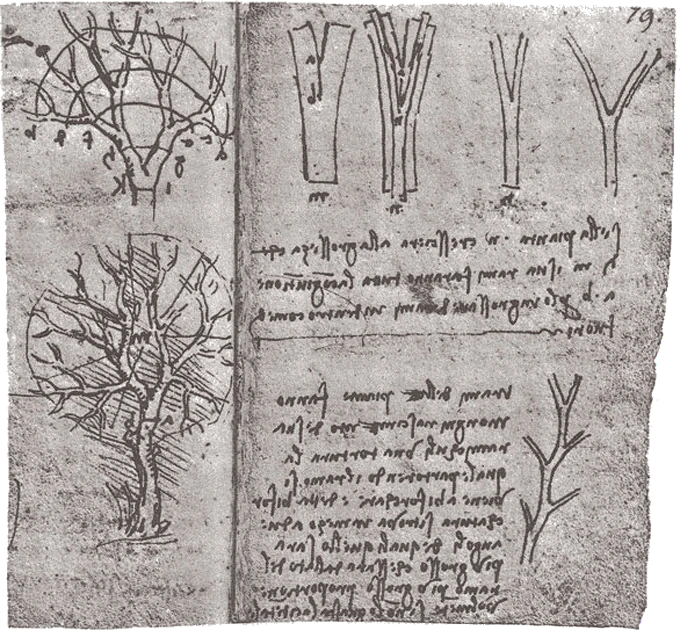 Figure iii. A page of Leonardo’s notes on how trees branch. sketched out a ‘Rule of Trees’ centuries ago, and used it for naturalism in his art. This is the principle I implemented to some degree in the dendrogram, which had uniform stroke widths originally.

There is a little legend below the dendrogram that conveys the technical names for the information presented above. Like the column labels in a spreadsheet, appended at the bottom instead.
Coat Patterns
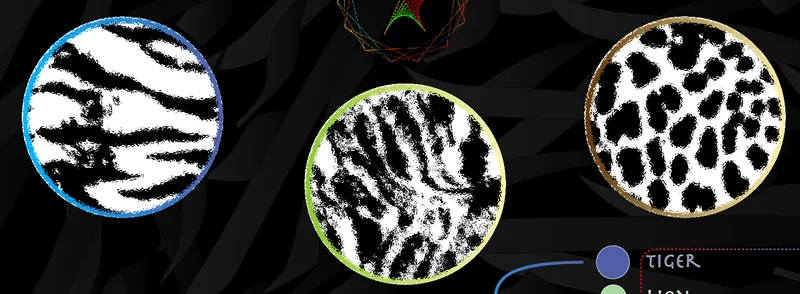
The background, reminiscent of tiger stripes, is meant to represent a ball of yarn, and a curled-up cat. It’s the calligram sun motif I use in all the pieces. There is a set of six circles filling out the negative space that feature the coat patterns for six species.
Genetics & Variation
You can learn interesting things about genetics (specifically X-chromosome inactivation) by looking at the pattern of colours on a calico (tri-colour) catdCalico cats with tri-colour coats are almost exclusively female due to X-chromosome inactivation. Male calicos are exceedingly rare, usually resulting from chimerism or Klinefelter syndrome.. Unpigmented areas are white, pigmented areas with the black X inactivated are orange, while pigmented areas with the orange X inactivated are black.
Siamese cats with point colouration exhibit acromelanism. They have partial albinism due to a mutated enzyme that helps produce melanin. The mutated tyrosinase is inactive at regular body temperatures, but it works at cooler temperatures. This leads to the white body and the dark face/paws/ears. Physical temperature gradients brought to life by the chemistry of life!
Soviet linguist Yuri Knorozov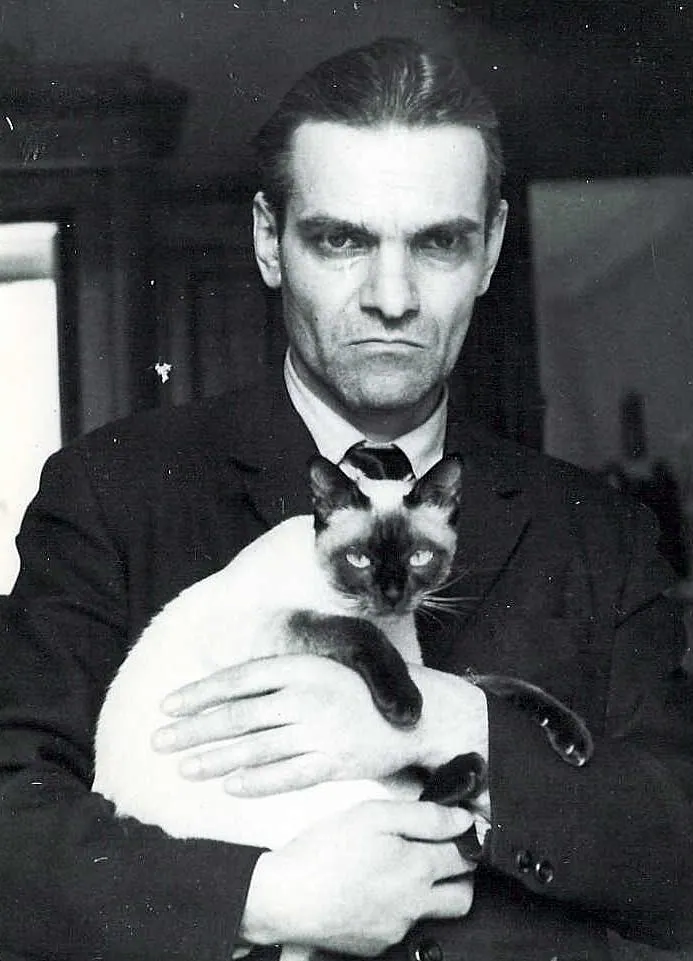 Figure iv. Yuri Knorozov and his Siamese cat Asya., pictured with his Siamese cat Asya, is famous for deciphering the Maya script in 1952. Or making a significant advance, at least. He once named Asya as co-author of a paper, and was not pleased when the editor had the temerity to cross her out.
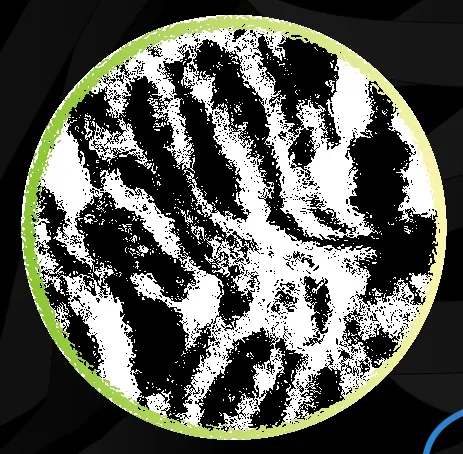
I rendered the fur patterns included in the visualisation in black-and-white. I also added a rippled glass texture to better bring out their role in camouflage. The colour of the circle’s circumference can help identify which species the pattern comes from, since it is the same gradient stroke as the final branch for a particular species.
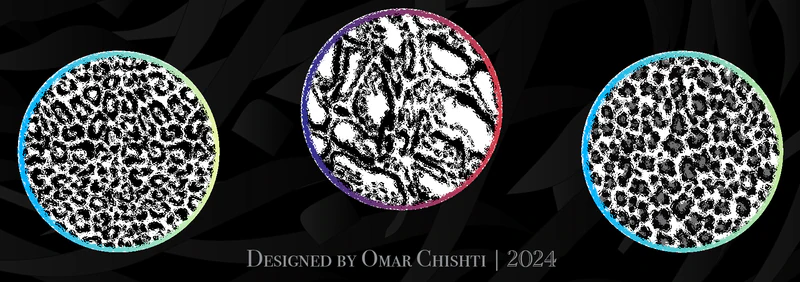
A few are rather obvious. From left to right, for the three in Figure 4: a tiger, a domestic cat, and a cheetah. The three in Figure 5: a jaguar, a clouded leopard, and a leopard.
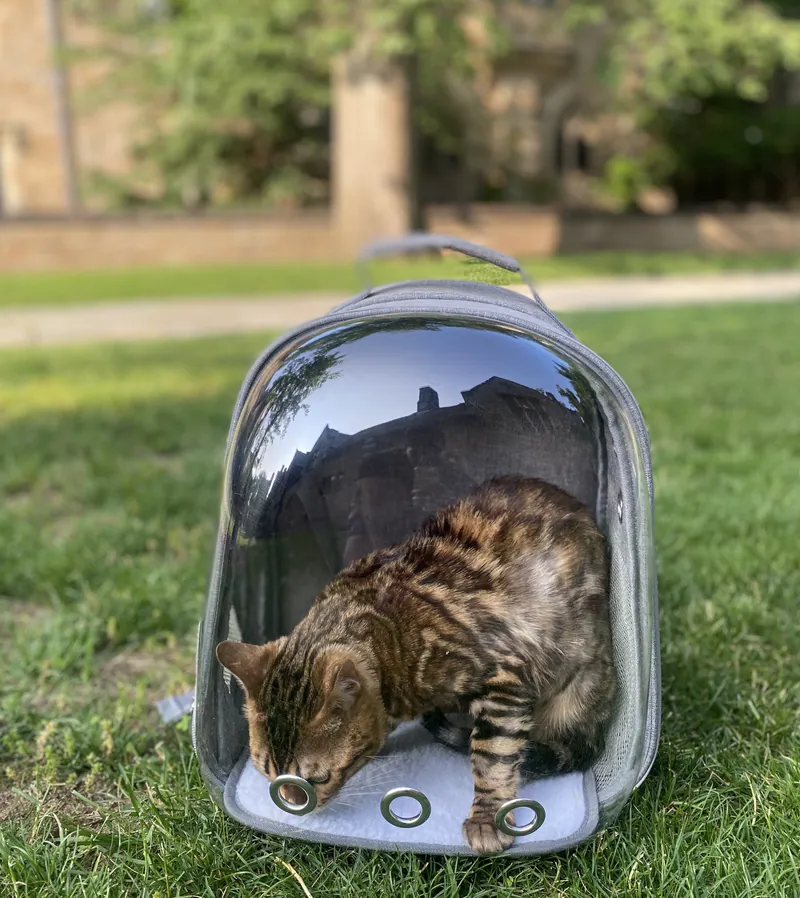
The domestic cat pattern is from my [formerly] own kitten Zafran! He’s doing quite well with his new family in New York.